
How to Stop Paying 15%+ OTA Commission Fees (And Build Your Own Direct Booking Engine)
 610 Web Lab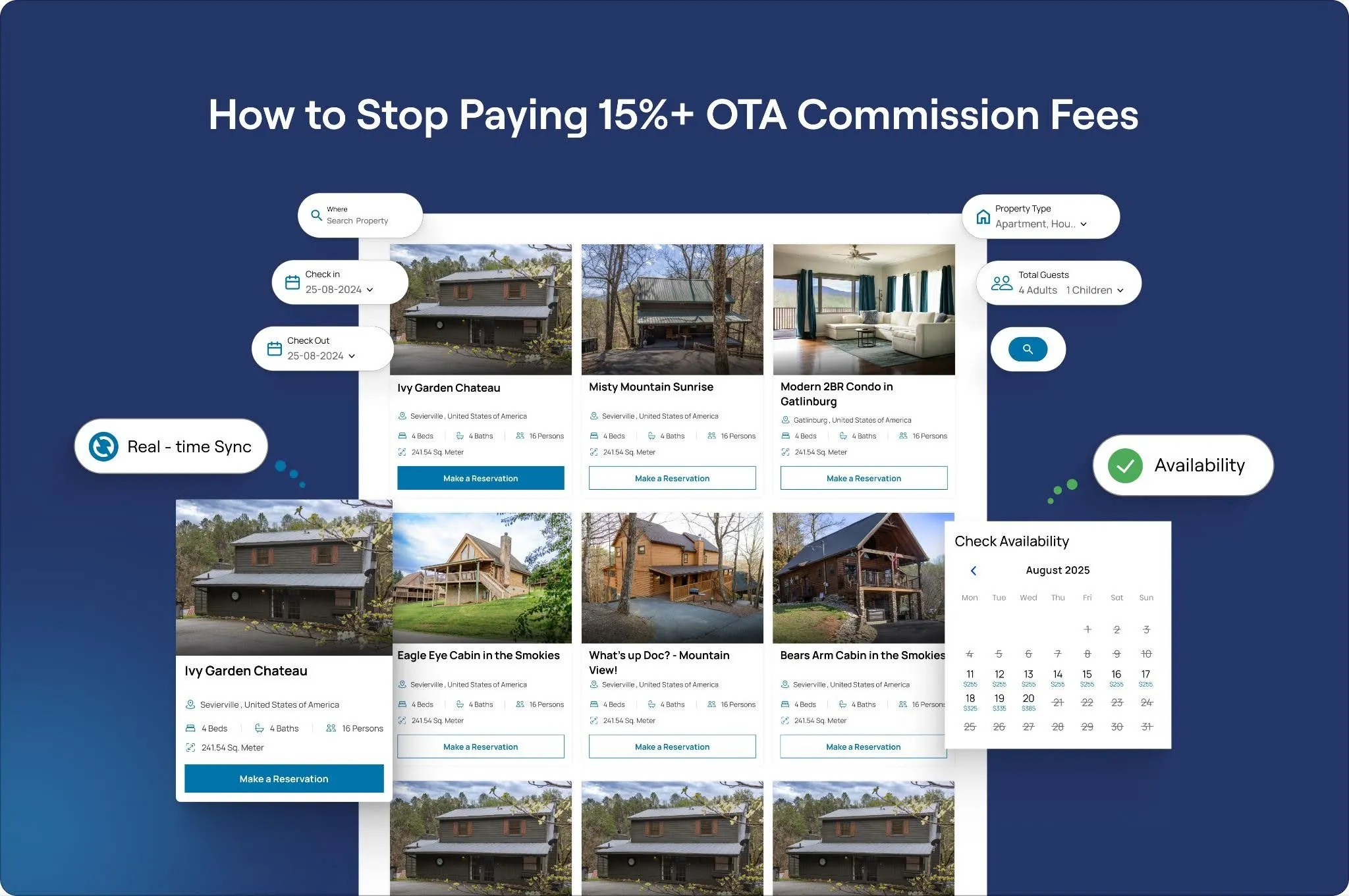
If you manage even a handful of short-term rental properties, you already know the feeling. Another booking comes in, you get excited, and then you check the payout and remember that 15%, 18%, sometimes even 20% just walked out the door before the guest ever checked in.
That’s the quiet tax every Airbnb host and property manager pays for relying on someone else’s platform. And it adds up fast. On a property that brings in $50,000 a year through OTAs, you could be handing over $7,500 to $10,000 annually just for the privilege of being found.
Fortunately, accepting these cut-throat fees isn’t your only option. By setting up your own vacation rental direct booking engine, you retain full control over your revenue, build direct guest relationships, and protect your business from sudden algorithm shifts. In this guide, we’ll cover why OTA commissions cost more than you think, how direct booking software works, and how Hostaway and WordPress make implementation straightforward.
Why OTA Commission Fees Hurt Your Business
Commission fees aren’t just a line item. They quietly reshape how you price, market, and plan your entire operation.
Here’s what that actually looks like in practice:
- Thinner margins on every booking. A $ 200-a-night stay might net you $170 or less after fees, before you even factor in cleaning, taxes, or platform-required amenities.
- Pressure to raise prices. Many hosts inflate nightly rates to offset commissions, which can make listings less competitive against properties that don’t need to.
- No control over the guest relationship. OTAs own the guest’s contact information, not you. That means no email list, no easy way to invite them back, and no relationship to build on.
- Policy changes you can’t negotiate. Search ranking rules, cancellation policies, and fee structures can change overnight, and you’re expected to adapt.
None of this means OTAs are useless. They’re excellent for visibility, especially for new properties. The problem is depending on them entirely.
The Hidden Cost of Depending Only on Airbnb and Other OTAs
The commission itself is only part of the story. The bigger issue is what economists would call opportunity cost.
Think about a guest who stays with you once through Airbnb, loves the property, and would happily book again. Without a direct channel, that guest has no way to come back to you directly. They’ll search Airbnb again, and there’s a real chance they’ll land on a competitor’s listing instead, or you’ll pay another commission just to host the same person twice.
Property managers running multiple units feel this even more acutely. If 100% of your bookings come through OTAs, your entire business is built on a platform you don’t control. A sudden policy shift, an account suspension, or increased competition in your market can hit your revenue overnight with no backup plan.
This is exactly why more owners are looking at ways to avoid OTA commission fees, not by abandoning platforms like Airbnb and Vrbo, but by building a parallel channel that puts them back in control.
What Is a Vacation Rental Direct Booking Engine?
A vacation rental direct booking engine is simply a website, owned by you, where guests can search your properties, check real-time availability, and book directly without going through a third-party platform.
Instead of a static site with a “contact us to book” form, a proper direct booking engine includes:
- Real-time availability synced with your property management system
- Secure online payment processing
- Automatic rate updates across all your listings
- A booking calendar guests can use without back-and-forth emails
- Confirmation and follow-up emails handled automatically
The keyword here is “engine.” It’s not a brochure site. It’s a functioning booking system that runs your reservations the same way Airbnb does, except every booking that comes through it is commission-free (aside from standard payment processing fees).
Benefits of Building Your Own Direct Booking Website
Once you have a direct channel running alongside your OTA listings, the advantages compound over time.
You keep more revenue. Every booking that comes through your site skips the 15%+ commission entirely. Over a year, that can mean thousands of dollars back in your pocket per property.
You own the guest relationship. You collect emails, build a returning guest list, and can market directly to past visitors with offers OTAs would never allow.
You control pricing and promotions. Want to offer a returning guest discount or a last-minute deal? On your own site, you can do it instantly, without waiting on a platform’s promotional tools.
You build brand credibility. A well-designed Airbnb direct booking website signals professionalism. Guests researching your property on Google will find a real business, not just a listing among thousands.
You reduce platform risk. If an OTA changes its algorithm or suspends an account for reasons outside your control, your direct site keeps functioning regardless.
Why WordPress Is an Excellent Choice for Vacation Rental Websites
WordPress powers over 40% of all websites for good reason. For vacation rental businesses specifically, it hits a sweet spot between flexibility and simplicity.
- It’s SEO friendly out of the box, which matters enormously for a business that lives and dies by local search visibility
- There’s an enormous ecosystem of themes and plugins built specifically for hospitality and booking businesses
- It’s easy for non-technical property managers to update content, add photos, and manage pages
- It scales well, whether you’re running one property or fifty
- It integrates with property management systems, payment gateways, and marketing tools without needing custom development for every piece
For a host who wants a real, professional web presence without hiring a full development team, WordPress remains one of the most practical platforms available.
How Hostaway WordPress Integration Works
If you’re already using Hostaway to manage your listings, calendars, and channel distribution, connecting it to a WordPress website is the natural next step
Hostaway WordPress integration works by syncing your property data, availability, and rates from Hostaway directly into your WordPress site. Instead of manually updating your website every time a booking comes in elsewhere, the connection keeps everything current automatically.
In practice, this means:
- When a guest books through Airbnb, your WordPress calendar updates instantly to block those dates
- When you adjust pricing in Hostaway, your website reflects the new rates without manual edits
- Guests booking through your website are added straight into your Hostaway reservation system, just like any other booking
This is what makes the whole system trustworthy. Nothing about the process depends on you remembering to update two systems separately.
How the Hostaway Connector Plugin Helps
This is where things get genuinely simple for hosts who aren’t developers. The Hostaway Connector plugin was built specifically to bridge Hostaway’s Hostaway API direct booking capabilities with WordPress, without requiring custom coding.
Instead of hiring a developer to build a custom integration from scratch, the plugin handles the heavy lifting:
- Pulls your live listings, photos, and property details straight from Hostaway into WordPress
- Displays real-time availability calendars for each property
- Processes secure payments for direct bookings
- Sends confirmed reservations back into Hostaway automatically
- Keeps pricing, minimum stays, and special offers synced across both systems
For a host or property manager who wants a working vacation rental direct booking engine without months of custom development, this kind of plugin turns what used to be a complex technical project into something you can realistically set up yourself, or with a small amount of support.
Step-by-Step Guide to Creating Your Direct Booking Engine
Here’s a realistic path from zero to a functioning booking website:
Set up your WordPress site.
Choose a clean, fast, and mobile-friendly theme designed specifically for hospitality, real estate, or vacation rentals. Ensure your site structure is intuitive so potential guests can navigate effortlessly between properties and booking pages.
Install the Hostaway Connector plugin.
Add and activate the official Hostaway Connector plugin within your WordPress dashboard. This acts as the secure bridge linking your property management system (PMS) directly to your website.
Connect your Hostaway API credentials.
Generate your API key and Account ID in Hostaway, then input them into the plugin settings. Once connected, your listings, live calendars, pricing, minimum stay rules, and custom rates will automatically sync across both platforms in real time.
Build individual property pages.
Create dedicated pages for each rental property. Feature high-resolution photo galleries, engaging and honest property descriptions, detailed amenity checklists, host rules, and local neighborhood highlights to build guest trust.
Add an interactive booking calendar to each listing.
Embed a dynamic booking widget on every property page. This allows guests to instantly check real-time date availability, select stay ranges, view price breakdowns, and initiate a reservation without ever leaving your site.
Set up secure payment processing.
Integrate trusted payment gateways such as Stripe or PayPal into your booking flow. Ensure PCI compliance and SSL encryption so guests feel completely confident entering their credit card details for instant authorization and deposit payments.
Test the full booking flow yourself.
Run multiple complete test reservations from the guest perspective, from date selection through checkout. Verify that test bookings immediately reflect on your Hostaway master calendar, trigger the appropriate automated guest emails, and update availability across your connected OTAs.
Launch and promote your direct site.
Publish your site and start actively driving traffic to it. Add your website URL to your social media bios, include direct booking incentives on business cards, place QR codes in your guest welcome books, and run targeted email campaigns to repeat guests.
Once this is live, you have a real vacation rental direct booking strategy in place, not just a website that looks nice but doesn’t actually convert visitors into paying guests.
Best Practices for Increasing Direct Bookings
Building the engine is half the work. Getting people to actually use it is the other half.
- Offer a small incentive for direct bookings, such as a discount, free late checkout, or a welcome gift
- Mention your website in every OTA guest message, especially post-checkout follow-ups
- Collect emails at checkout and send a thank-you message with an invitation to book direct next time
- Invest in local SEO, since guests searching “cabin rentals near [location]” are valuable direct traffic
- Keep your site fast and mobile-friendly, since most guests will be browsing from their phones
- Show real reviews on your site, pulled from your OTA listings or collected independently
Common Mistakes to Avoid
A lot of hosts start strong and then lose momentum. Watch out for these pitfalls:
- Building a static site with no live booking function. A “contact us” form is not a booking engine, and most guests won’t bother emailing.
- Letting calendars fall out of sync. Double bookings destroy guest trust fast, and they’re avoidable with proper integration.
- Ignoring SEO entirely. A beautiful website that nobody finds won’t generate direct bookings.
- Underestimating page load speed. Slow sites lose bookings before guests even see your calendar.
- Forgetting mobile guests. If your booking flow is clunky on a phone, you’re losing a large share of potential bookings.
Frequently Asked Questions
1. How much can I actually save by using a direct booking engine?
It depends on your booking volume, but many hosts save the equivalent of 15% to 20% on every reservation that moves from an OTA to their own site.
2. Do I need coding experience to set this up?
No. With a plugin like Hostaway Connector, most of the technical work is handled for you, though some hosts still choose to work with a developer for custom design touches.
3. Will a direct booking site replace Airbnb entirely?
Not usually, and it doesn’t need to. Most successful hosts run both channels together, using OTAs for visibility and their own site for repeat guests and fee-free bookings.
4. How long does it take to set up a Hostaway and WordPress integration?
A basic setup can be running within a few days. More custom designs or larger property portfolios may take a bit longer.
5. Is a direct booking engine only worth it for hosts with many properties?
Not at all. Even a single-property host can benefit, especially if they have repeat guests or a strong local reputation to build on.
Conclusion
OTA commission fees will always be part of the short-term rental business to some degree, but they don’t have to define your profit margins. Building your own vacation rental direct booking engine gives you a real path to keep more of what you earn, own your guest relationships, and reduce how much your business depends on platforms you don’t control.
With Hostaway already managing your operations, connecting it to a WordPress site through a tool like the Hostaway Connector plugin is one of the most practical ways to make this happen without a massive development project. If you’re ready to stop giving away 15% or more of every booking and start building something that’s truly yours, now is a good time to start.
You don’t need to hire a developer or spend months building this from scratch. The Hostaway Connector plugin does the heavy lifting for you, syncing your listings, calendars, and rates straight from Hostaway into WordPress so you can start accepting direct, commission-free bookings right away.
Get the Hostaway Connector plugin today and turn your WordPress site into a real vacation rental direct booking engine, one that pays for itself the moment you land your first direct reservation.
Let’s Discuss About Your Project!
 Exclusive up to 71% OFF for New Customers
Get Hostaway WordPress Connector Pro Now
Advanced tools to grow your rental business effortlessly.
Our Most Recent News Blogs
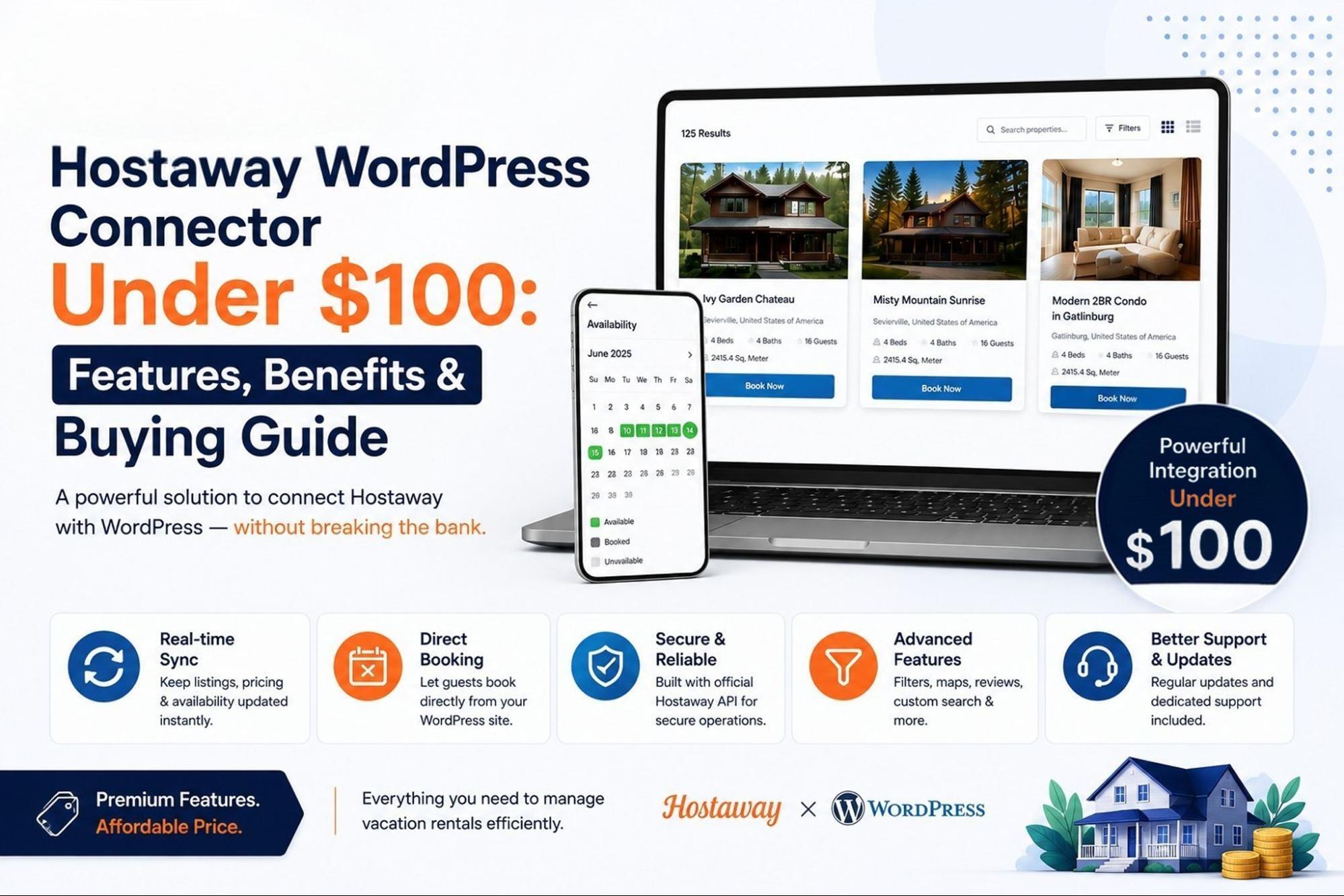

Hostaway WordPress Connector Under $100: Features, Benefits & Buying Guide
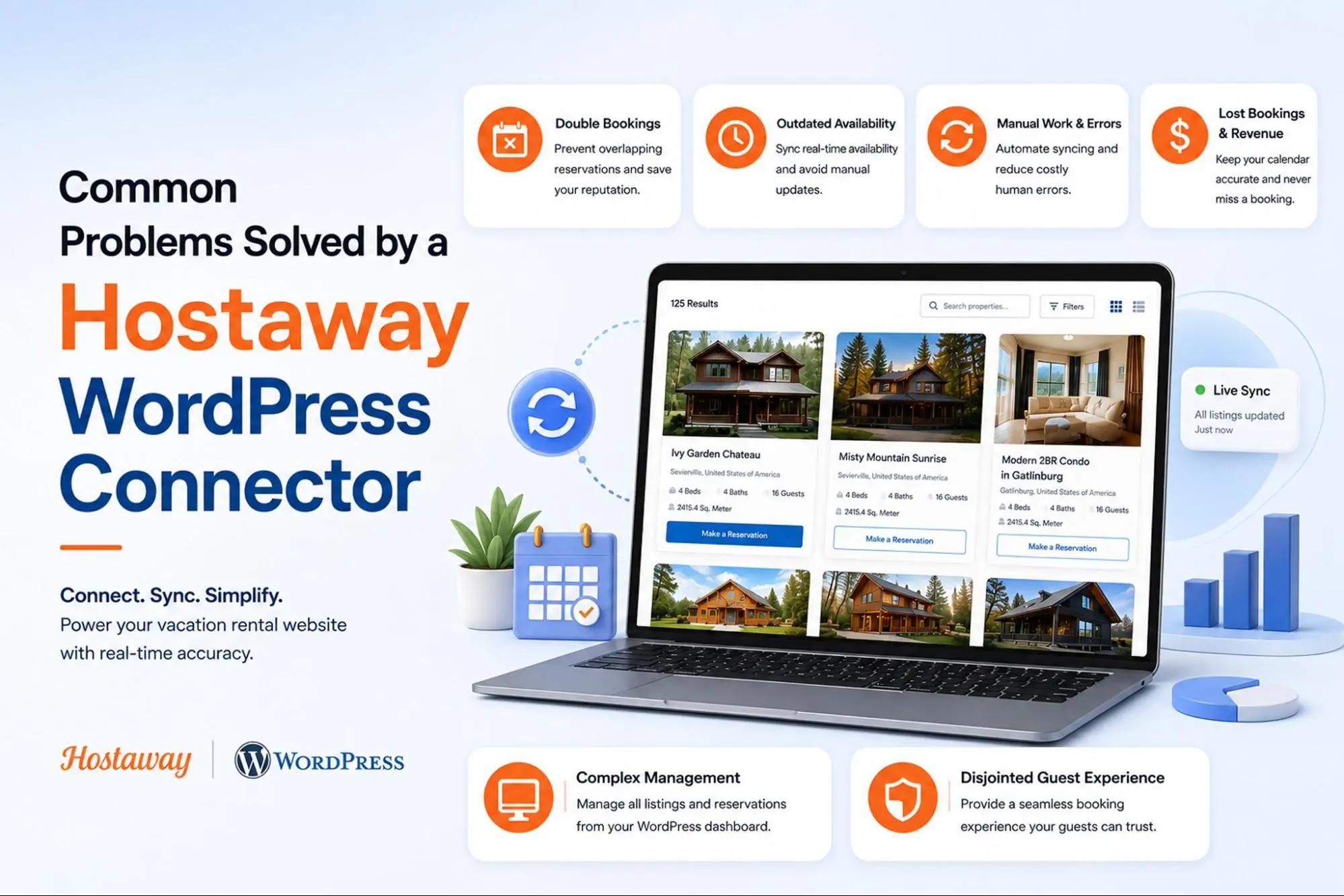
Common Problems Solved by a Hostaway WordPress Connector
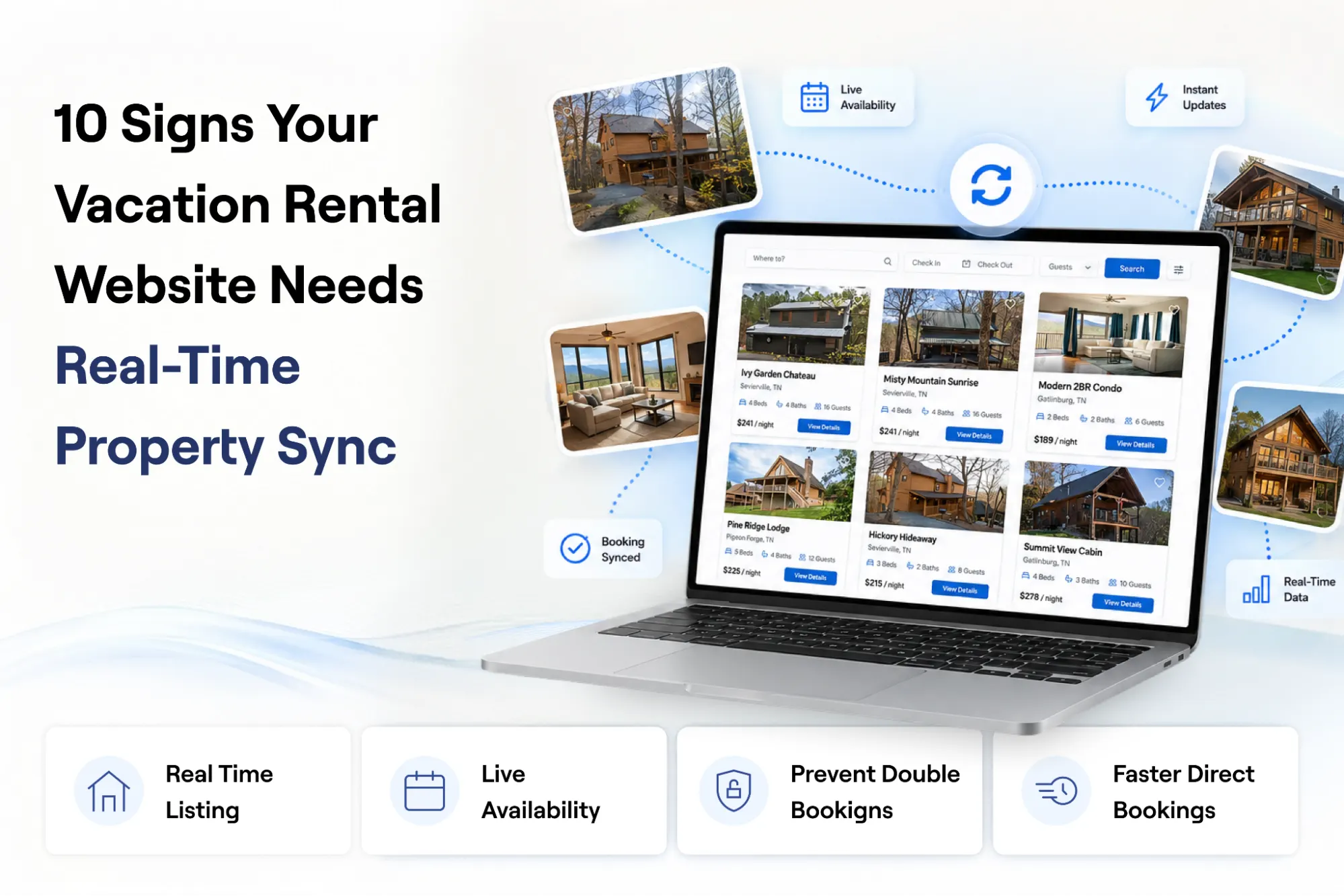
10 Signs Your Vacation Rental Website Needs Real-Time Property Sync
we are trusted by
1000+ clients worldwide







contact us
Get in Touch with our Skilled Tech Team

Opposite to Hindustan Times, Phase-8B
Industrial Area Mohali


Sat-Sun: Closed

